
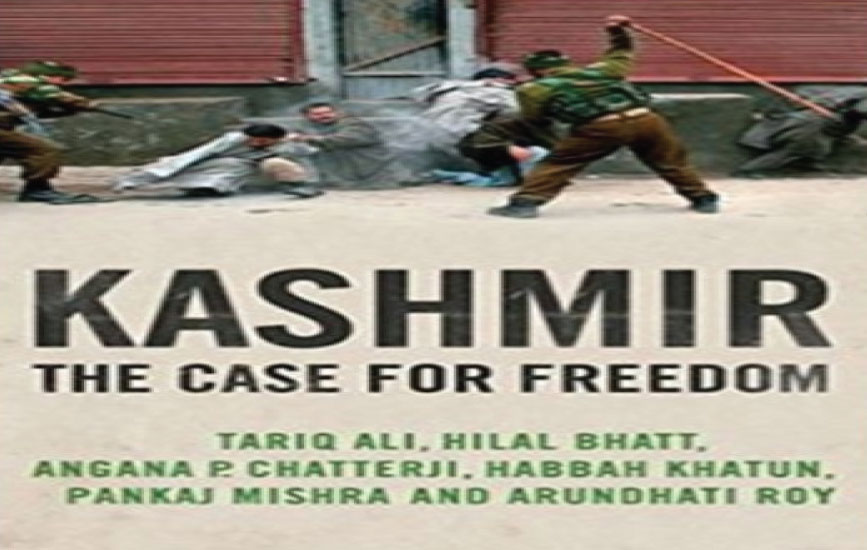
In 1933, when the Nazis assumed ascendancy in Germany, one of the earliest acts they carried out was a symbolic cleaning of thought where they burnt books that opposed their philosophy since they fear that ideas rather than armies could undermine their domination. It was not just the sight of flames consuming literature that we were looking at, it was also the torment against the very conscience of a people. Around a hundred years later in August, 2025, Indian authorities restricted twenty five books in Jammu and Kashmir one of which was Kashmir: The Case of Freedom. It was no bonfire of manuscript but rather a more bureaucratic and silencing destruction but no less immoral in aim. The move by the government of India, to ban this compilation of essays, demonstrates a fear of the power of memory, resistance and of alternative histories.
Kashmir: The Case for Freedom published in 2011 by Verso is an anthology of essays authored by Tariq Ali, Arundhati Roy, Pankaj Mishra, Hilal Bhatt and Angana P. Chatterji. The book is a three-dimensional excursion to Kashmir imbroglio, where it intertwines history, politics and human rights. The contributors problematize the mainstream statist rhetoric through highlighting the voices and experiences of Kashmiri people and occupation. Tariq Ali puts the conflict in the context of broken promises and especially the refusal to give a plebiscite. Through Kashmir, Arundhati Roy is making an excruciating criticism of Indian nationalism and its moral bankruptcy.