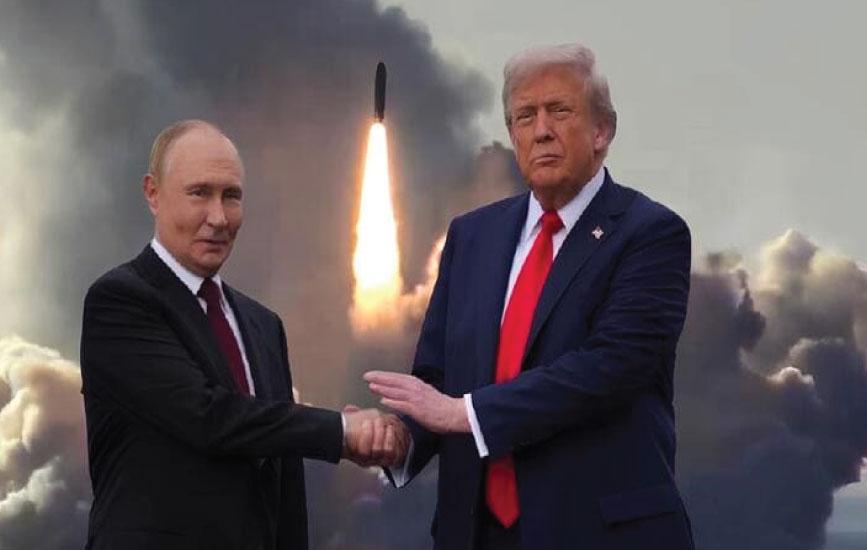
The expiration of the New START Treaty on February 5, 2026 marks a very significant date for world nuclear stability and governance.
For more than a decade, New START has served as the only legal framework that in fact restrains the U.S and Russian strategic nuclear forces offering limits, transparency and verification that are essential to ensure that the nuclear competition between the two largest nuclear powers in the world does not get out of hand. In case of lapse, it would be a first in over fifty years that Washington and Moscow would be functioning without any official limitations on their strategic weaponry.
Although the level of mistrust and diplomatic tensions are high, recent developments have provided some reason to believe that both parties, although reluctantly, still regard arms control as an imperative stabilizer and not simply a Cold War relic. The fact that they have held negotiation in Abu Dhabi voluntarily on maintaining New START limits beyond the formal expiry date indicates that the two parties have an understanding of how dangerous an unregulated strategic landscape would become.
Although no legal extension of any kind is in sight, the two rival parties contemplating a non-formal treaty caps clearly points to an unofficial agreement: allowing all restraints to collapse simultaneously would significantly elevate nuclear risks. These recent developments reveal a paradoxical truth about the modern politics in the nuclear arena: arms control is unpopular both politically and institutionally, but nonetheless, it is a strategic necessity.
The importance of Arms control does not simply lie in limiting numbers of nuclear arsenals but also in the predictability, transparency, and crisis-management. For over five decades, the bilateral arms control treaties between Washington and Moscow have transformed their nuclear rivalry from an uncontrollable competition towards something that was more manageable. These negotiations provided means of communication even when the Cold War was at its peak. The erosion of the arms control framework along with emerging technologies, missile defense aspirations, and military modernization could diminish primary guardrails that have previously helped to keep escalation in check.
The recent attempts at resuming military to military dialogue also highlight this concern. The recent top-level interactions between U.S. and Russian defense officials indicate that even without official treaties, there is an urgent necessity to have alternative mechanisms of risk management. In the absence of these mechanisms, the strategic equilibrium will degenerate more and more into posturing of forces, competition in technological terms, and worst-case planning-dynamics, which reward an arms race, rather than restraint.
This development points to the fact that the arms control is not maintained due to trust, goodwill, or diplomatic zeal, but because unchecked arm race in an era of rapid military innovation is much more dangerous. The unobtrusive readiness of the two parties to consider a temporary restraint shows a strategic logic that is still intact since the Cold War. Arms control can be feeble, ad hoc, and politically vulnerable, nonetheless, it is at the core of preventing a miscalculation, curbing escalation and maintaining some degree of nuclear stability in an ever more volatile international system.
In the past, arms control and nuclear deterrence have operated as stabilizing forces especially during the cold war whereby organized dialogue served to deal with existential competition. Those stabilizers are wearing away, however, today. The growth of geopolitical conflict, the breakdown of trust in nonproliferation regimes, the suspension of several bilateral arms control arrangements have drained out the structure that previously established strategic restraint. The current geopolitical context is therefore an impending sign of what many commentators are terming as “third nuclear age”, where the classic great-power competition is already being re-created, but where emerging technologies in the military realm also look to confuse classic calculations of deterrence.
Innovation on Both Sides: A More Crowded Deterrence Landscape
Russia’s development of new nuclear delivery systems has already changed the strategic discourse. Deterrence dynamics are subjected to new uncertainties through the introduction of platforms like the Avangard hypersonic glide vehicle, the Burevestnik nuclear-powered cruise missile and the Poseidon nuclear-powered underwater drone. These systems will probably not essentially destroy U.S. second-strike capabilities, but they make perceptions of threats more difficult and contribute to mutual modernization drives.
Meanwhile, the United States is experiencing its own military overhaul which has a far-reaching effect. The US defense strategy is focusing more on being autonomous, connected and having smarter systems to ensure that it has a technological advantage. This incorporates artificial intelligence, robots, hypersonic weapons, and modern communications – often developed in collaboration with commercial sector. Washington is advancing towards the next level of hybrid force that combine manned and unmanned platforms, such as drone swarms, loyal wingman aircraft (XQ-58A Valkyrie), autonomous ground systems (Surrogate HIMARS launcher), and uncrewed underwater vehicles to be used against mines and underwater operations.
Simultaneously, U.S. spending on high-tech weaponry, including hypersonic missiles that cannot be intercepted, directed-energy weapons for air and missiles defense system, and long-range precision fire, such as the Precision Strike Missile (PrSM), are increasing. These innovations though meant to enhance deterrence, compress decision-making timelines, and risk misinterpretation, especially in the event of a crisis, as the emerging technologies can overlap with the nuclear command, control, and communications (NC3).
Artificial intelligence is another risk to NC3 implementation. Although AI can lead to better situational awareness and data processing, overuse of automation increases the risk of unintentional escalation. Human judgment will always be necessary in this kind of environment as the margin for error is shrinking.
In this environment where emerging technology and military innovation is changing the discourse on deterrence and nuclear stability, arms control attempts has become critical. Recently, The Bulletin of the Atomic Scientists revealed that the doomsday clock has advanced 85 seconds to midnight, the closest since 1947. The cited reasons behind this advance include the collapse of nuclear arms control, the absence of strong diplomatic systems, and growing rivalry between nuclear-armed states posing threats for escalation management.
Arms Control without Structure
This recent attempt at arms control indicates that there is this residual awareness of arms control as an anchoring need. But alongside this new pragmatism, there appears an ever-increasing difference between the diplomatic intent and the institutional capacity. The post–New START environment is thus defined less by outright rejection of arms control than by an inability to sustain it through formal, durable diplomatic mechanisms.
Russia’s position on arms control reflects this contradiction. Although President Vladimir Putin has repeatedly criticized the West for its actions that have undermined the bilateral talks on arms control and deteriorated the strategic stability. He has further warned against the abandonment of NEW START’s limits. In his remarks, he has indicated that it is ready to keep within the main quantitative limits of the treaty on a voluntary basis provided the United States does the same. Yet Russia has also tied any future framework to broader strategic concerns, particularly the nuclear forces of the United Kingdom and France. These conditions highlight the fact that strategic stability can no longer be confined to a narrow bilateral equation.
On the other hand, the U.S. has also signaled a cautious recognition than outright rejection of arms control. US President Donald Trump rejected Russia’s proposal to temporarily extend New START limits after the treaty expired, instead calling for negotiations on a new, modernized nuclear arms agreement. Significantly, the recent news of U.S.-Russian talks in Abu Dhabi and the renewal of high-level military-to-military talk shows that both sides are striving to ensure that there will be no outright collapse of strategic stability at least on an informal or provisional basis. Although it is unmediated whether or not some voluntary adherence to New START limits will be institutionalized, these negotiations indicate that there is a common agreement that unchecked nuclear competition poses too much of a risk.
But the problem arises when years of diplomatic neglect undermine arms control diplomacy both professionally and instructionally. Neglect, shuffle and reduction of expert negotiating capabilities have left both parties ill equipped to make this tentative convergence into detailed verifiable agreements. The vacuum in the diplomatic infrastructure in the United States and Russia has been filled up by the defense establishment, where arms control has at times been construed as a constraint on flexibility rather than a tool of risk reduction or management. This has strengthened the emphasis on missile defense and advanced weapon programs, making further negotiation restraint prospects even more difficult.
The result is a fragile equilibrium. Both Washington and Moscow appear to recognize that some form of arms control remains indispensable in an era of military innovation and heightened mistrust. However, without renewed investment in diplomacy and negotiating capacity, this recognition is unlikely to produce durable outcomes. Instead, nuclear stability risks becoming dependent on ad hoc understandings, voluntary restraint, and unilateral calculations—arrangements that are inherently reversible and far less resilient than formal arms control regimes.
Author: Qurat-UL-Ain Shabbir – PhD scholar and gold medalist in MPhil from Quaid-e-Azam University, Islamabad. She is a research officer at CISS AJK with expertise in comprehensive security.