

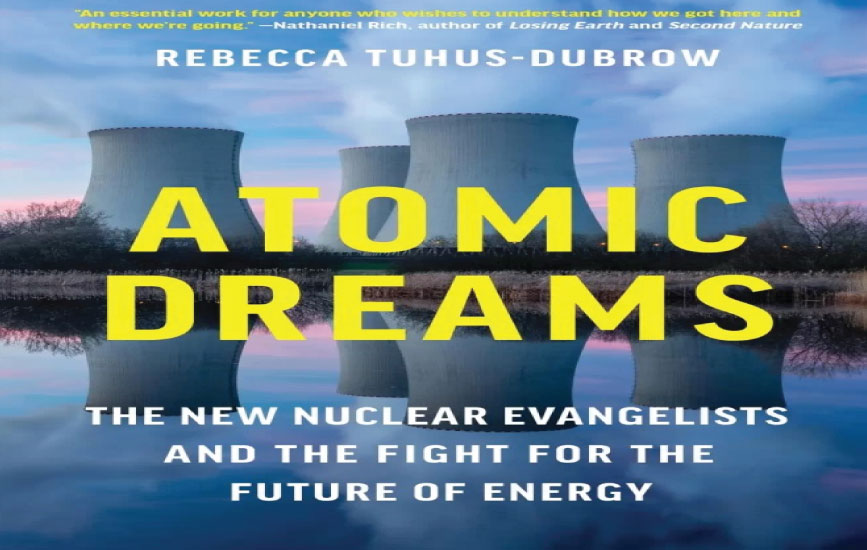
The book “Atomic Dreams: The New Nuclear Evangelists and the Fight for the Future of Energy”, authored by Rebecca Tuhus-Dubrow, and published on April 8, 2025, by Algonquin Books, provides a closer examination of nuclear energy and the way the opinion about it has evolved. It takes us through the history, the milestones and the personal lives of people to demonstrate the changes in the attitudes of the general population particularly the environmentalists towards nuclear power. The author presents a solid argument that nuclear energy can and must, despite its controversial history, be seen as an inevitable component of the solution to the energy and climate issues facing the world.
The Fukushima disaster is one of the major incidents in the book. A huge earthquake and tsunami struck Japan in March 2011 causing a meltdown at Fukushima Daiichi Nuclear Power Plant. Nuclear energy was feared because there was a release of radioactive materials. The book relies on this event to demonstrate the fact that the world attitude towards nuclear power began to change. Prior to Fukushima, most individuals were afraid of nuclear power due to disasters in history such as Chernobyl. However the book still asserts that Fukushima cannot be said to be the final verdict in nuclear energy. Instead it led to the debate on the use of nuclear energy in addressing climate change.
The book narrates the life experience of some major individuals who opposed nuclear energy but later changed their minds. Individuals such as Stewart brand and Michael Shellenberger who were outspoken critics of nuclear energy in the earlier years have become some of the greatest advocates of it now. Their narratives show the fact that one can change his opinions once he knows more about the science of nuclear energy. Another case is the example of a nuclear scientist, Tom Blees, the individual with no nuclear background who researched the matter and became an avid supporter of nuclear power. The book gives importance to the role of scientific knowledge in shaping the attitude of an individual and causing him or her to embrace nuclear power
The traditional environmental movement is also criticized by the author. The movement has not been quick to respond to climate change issues despite having successes including the reduction of pollution. According to the book, renewable energy such as solar and wind power, is incapable of covering the increasing energy demand in the world. Nuclear energy has been offered as a solution that can assist in addressing these energy needs and decrease carbon emission despite its past record of resistance.
A large portion of the book is devoted to the description of the advanced nuclear technologies, including Integral Fast Reactor (IFR). The IFR is a new design of reactor which addresses most issues surrounding conventional nuclear power including nuclear waste and safety issues. These new technologies have been described in simple terms, which are easy to comprehend by the reader because the author describes them in a simple way. The IFR is being introduced as a technology which would potentially render nuclear power safer and more efficient than the older reactors.
Another issue that is addressed in the book is the nuclear waste problem, and this issue has been of great concern over the years. The author states that the new technologies, like the IFR, would contribute to the solution to the problem of waste through its recycling and decrease in volume. The book presents an argument that nuclear waste is a solvable problem as opposed to the harm that burning fossil fuels do to the environment. Nuclear energy is more sustainable and this issue can be addressed with the appropriate technology.
There is also no hesitation to touch on the dangers of nuclear energy in the book. It provides an example of the Fukushima disaster to warn the readers about the possible dangers of nuclear power. Yet, the author insists that the hazards of nuclear power can be controlled nowadays when the safety precautions are taken into account. The book suggests that nuclear power has many advantages particularly with regards to climate change which greatly outweigh the risks. Nuclear power is portrayed as a clean and reliable energy source that will be useful in reducing carbon emissions and in combating global warming.
The book is also emotional due to the narration of the personal stories of the individuals like Stewart Brand and Michael Shellenberger. The argument of nuclear power becomes more relatable by the fact that they are no longer nuclear sceptics but rather they are now the supporters of nuclear power. The readers can observe the human face of the nuclear debate as they can change the long-established opinions with the new information due to their travels.
The politics of nuclear energy is also discussed . The author clarifies how the debate on nuclear power has been influenced by governments, industries, and environmental groups. The political factor of nuclear energy is extremely significant because political opposition has delayed the nuclear energy technologies. The book recommends that politics and popular anxiety has been a cause of delaying nuclear power and demands a more practical view of nuclear energy which considers both the risks and the gains.
The other significant section of the book is its explanation of the legal and ethical issues surrounding nuclear energy. The author talks about how current laws and regulations governing the operations in the nuclear field are obsolete and tend not to focus on the distinct issues that are associated with nuclear power. It stresses that more stringent international laws are required to control nuclear power in a responsible manner that is safe.
The future of nuclear energy is also looked into in the book. It talks about the ways new technologies such as artificial intelligence and automation can help to enhance the operation of nuclear power plants. These inventions may be able to make nuclear power plants safer,more efficient, and reliable, thus being less expensive and more accessible.It has also raised some questions regarding the ethical and governance concerns that these new technologies come with. The author emphasizes that these technologies are not only promising, but also should be managed.
Though the book does a splendid job in explaining technical aspects of nuclear energy it could have also paid more emphasis on social and cultural factors that influence the opinion of the masses regarding nuclear energy. These factors are briefly noted by the author without going into detail as to how society and culture can shape the attitudes towards nuclear energy. More discussion on the social and cultural aspects would have provided more insight into the book.
The other improvement option is the ethical implication of nuclear energy. Although the book sketches over these issues it could have delved deeper into the issues. The book might have touched more on the effects of nuclear energy on local people, environment and the effects of disposal of nuclear waste in the long-term.
To sum up, it is important to note that the book is a solid argument on why nuclear power is worth a rethink as a solution to the climate crisis. It manages to put in doubt the traditional perception of nuclear energy as dangerous and obsolete. The book explains the science behind nuclear energy and talks about the emerging technologies which indicates how nuclear power can be instrumental in addressing the climate crisis. The author urges the readers to critically examine nuclear energy and how it can assist in curbing carbon emissions of the world.
The book is well-investigated and compelling. It is composed in a manner such that complicated scientific and political issues are simplified making it easy to read by a wide audience. This book offers a useful insight into nuclear power and how it can influence the future of the global energy policy. It is a necessary book to all who are concerned with energy policy, climate change, and the future of the planet.
The readers have the feeling of urgency at the conclusion of the book. The author demonstrates that although nuclear energy is rather risky it can also provide a valuable solution to the energy and climate change problems. The book is making the readers ponder on nuclear energy as an important solution to the burning issues that we have today.