
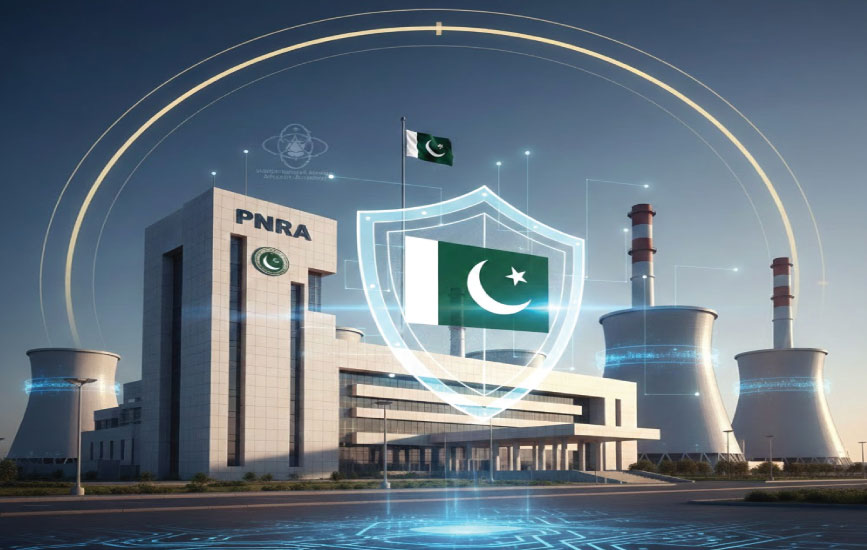
Nuclear safety and security occupy a central place in Pakistan’s national security calculus as technical imperative and institutional commitment. From the beginning, the realization existed in Pakistan’s policy circles that the credibility of its nuclear program rests on strong regulatory oversight along with adherence to international norms.
The Pakistan Nuclear Regulatory Authority is the result of that realization, adding confidence in Pakistan’s nuclear journey. From the onset when the first research reactor PARR- 1 was commissioned in Pakistan in 1965, the regulatory mechanism was in place. With the commissioning of first nuclear power plant in 1971 at Karachi, regulatory mechanisms were further improved. Nuclear Safety and Licensing Division was established in Pakistan Atomic Energy Commission Headquarters as de facto regulatory body. This was upgraded to Directorate of Nuclear safety and radiation Protection after 1984 Ordinance.
In 1994, the signing of International Convention on Nuclear Safety made it compulsory for Government of Pakistan to establish an independent nuclear regulatory body. The main responsibility was the implementation of regulatory and legislative framework to govern nuclear power and radiation use in the country. It also separated regulatory functions from promotional aspects of nuclear programme.
To further improve the mechanism, within PAEC Pakistan Nuclear Regulatory Board was established to oversee regulatory affairs. In 2001, the president of Pakistan promulgated Pakistan Nuclear Regulatory Authority Ordinance no 3, resulting in complete separation of promotion and regulatory functions and responsibilities.
Later in January 2001, Nuclear Regulatory Board was dissolved creating a competent and independent body -the Pakistan Nuclear Regulatory Authority. The main role of PNRA was to regulate nuclear safety, radiation protection, and transport and waste safety in Pakistan. It was also empowered to determine the civil liability for any damage due to nuclear incident in the country.
Since the beginning, the understanding existed regarding the unique risks linked to nuclear safety and therefore structured regulatory framework was established. Within few years, complete institutional separation was achieved.
This reflects on the responsible nuclear governance adopted by Pakistan that aligns with best international practices that focus on independent regulatory body for effectiveness and credibility of nuclear governance within a country. DG IAEA Rafael Grossi termed Pakistan nuclear safety record as “world class” and “impeccable” during his visit to Pakistan in 2023.
The regulatory mechanism established by PNRA overtime closely meet the global standards, especially developed by International Atomic Energy Agency. Pakistan incorporated IAEA safety standards, participated in international conventions and showed openness to peer review mechanisms. The National Institute of safety and Security (NISAS) works closely and collaborates with IAEA on areas of nuclear and radiation safety and security in domains of education, training and technical support. It provides state of the art training to various officials from national and international organizations.
Being part of Convention on Nuclear Safety, Pakistan showed its willingness to continuous improvement and international scrutiny over nuclear safety and security mechanism. The licensing, inspection and enforcement mechanism designed by PNRA are according to the International standards, ensuring the safety of nuclear infrastructure within internationally accepted safety margins.
PNRA role reflects Pakistan’s responsible behavior in the nuclear domain. Nuclear safety in Pakistan is considered a dynamic process that has evolved over the years with technological advancements and emerging risks as per lessons learned from global experiences. The upgradation is continuous part of PNRA, where regulatory mechanisms are updated, and emergency preparedness frameworks are enhanced. To keep pace with changing realities, human resource development is also strengthened within nuclear governance. Pakistan approach towards nuclear governance also shows that it views nuclear safety as a long term responsibility.
The scope of PNRA is not just limited to nuclear power plants but extends to include radiation protection in medical, industrial and research applications. It also covers transport safety, radioactive waste management and liability of nuclear incidents. The comprehensive scope highlights the importance of nuclear safety and understanding that nuclear risks are not only limited to high profile facilities. PNRA regulates full spectrum of nuclear and radiation infrastructure, contributing to public safety and strengthening the trust of public in peaceful use of nuclear technology.
Pakistan’s consistent engagement with international partners and the effective role PNRA has played over 25 years shows Pakistan’s efforts towards transparency, learning and cooperation in nuclear safety governance. The evolution of regulatory framework illustrate the responsible nuclear conduct by sustained institutional practice.
The PNRA’s institutional journey shows Pakistan’s strong commitment to nuclear safety, national security and international credibility. Nuclear security lapses and accidents are not isolated incidents but can have global ramifications and therefore adherence to nuclear safety is both a domestic necessity and international obligation. Through alignment of Pakistan regulatory framework with international standards, Pakistan has ensured that its nuclear program contributes to energy security, scientific progress and socio-economic development without compromising safety and security.
The two decades of PNRAs independent regulatory service highlights Pakistan’s consistent approach as a responsible nuclear actor. PNRA therefore act as a strong pillar entrusting confidence and trust in Pakistan’s nuclear journey fulfilling its responsibility of safe and secure nuclear governance within established frameworks.