THERE are moments in a nation’s history that come to define its institutional resilience, strategic posture and national cohesion. Marka-e-Haq – the Battle of Truth – represents one such moment for Pakistan.
From 22 April to 10 May 2025, Pakistan faced a significant military crisis that tested its deterrence capacity and response mechanisms. It did not flinch. It did not seek external mediation from a position of weakness. It responded with measured force and maintained its sovereignty.
On 22 April 2025, terrorists attacked innocent tourists in Pahalgam deep inside Indian illegally occupied Jammu and Kashmir. It was a tragic and horrific act. But what followed was equally disturbing. Within hours without any investigation and without any publicly presented evidence, India blamed Pakistan like always. India used a similar approach after Pulwama in 2019 and Uri in 2016.
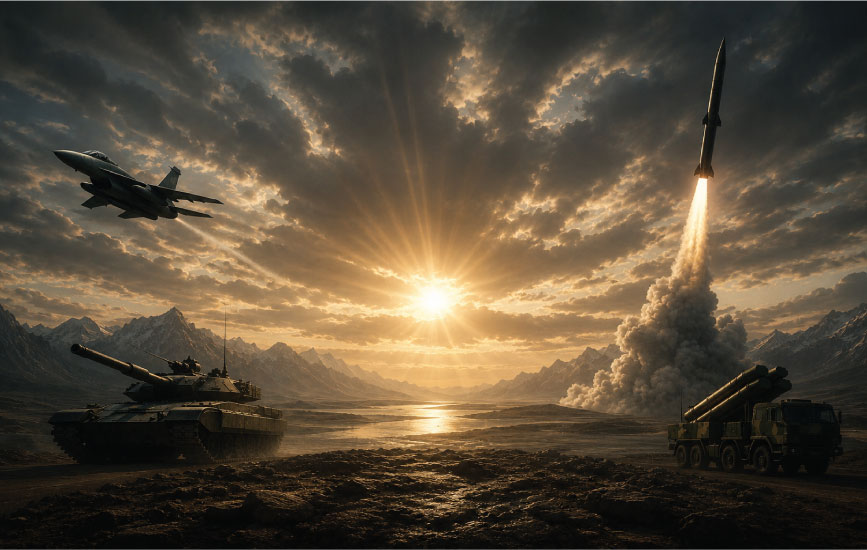
This time, Pakistan’s Prime Minister responded by offering a joint investigation into the Pahalgam attack. It was presented as a diplomatic and confidence-building measure. India did not accept the proposal. Instead on the night of 6 and 7 May 2025, India launched missile strikes on Pakistani territory. According to reliable sources these strikes resulted in the death of 31 civilians including men, women and children while 57 others were injured. On 10 May 2025, the Pakistan defence forces launched Operation Bunyan-un-Marsus, a name drawn from the Holy Quran, meaning a wall built of solid lead. The name reflected the posture Pakistan sought to project during the response. In a single carefully planned operation, Pakistan struck 26 Indian military targets. Air bases that had been used to launch attacks on Pakistan at Suratgarh, Sirsa, Pathankot, Srinagar, Jammu and others were reportedly hit with precision. The BrahMos missile storage sites at Beas and Nagrota were also targeted.
At the very outset of these hostilities, Pakistan also sought to establish aerial dominance. The Pakistan Air Force shot down six Indian fighter jets during the night of May 6–7 including four French-made Rafale aircraft. India has not officially responded to these specific claims, although it acknowledged suffering losses during the clashes. It was reported that Pakistan’s targets were confined to military bases with no attacks on civilians. Official statements emphasized that the targets selected were military in nature and that the response was intended to remain within the bounds of proportionality and deterrence. What made Maarka-e-Haq particularly significant was not only the military dimension but also the domestic response. Political parties that are often in opposition publicly supported the government’s stance. Media narratives largely aligned with national security priorities and public sentiment reflected a high degree of trust in state institutions. Pakistan showed that it has strong military capability and coordination among its defence forces. It later accepted a US-brokered ceasefire; a decision made after achieving key goals, including restoring deterrence.
On 12 May 2025, Prime Minister Shehbaz Sharif declared 10 May as Youm-e-Marka-e-Haq, a national day of remembrance. It is intended to commemorate those who lost their lives and to mark the broader significance of the episode in Pakistan’s strategic history. Maarka-e-Haq was not a conflict Pakistan initiated. However, its response is seen as a careful and measured use of force, showing national unity and a strong stand to protect its sovereignty under pressure.