
Key Takeaways:
- The article argues that external portrayals of Kashmir—as a landscape, disputed territory, security zone, or cinematic setting—have largely omitted the everyday perspectives of the people who live there.
- It contends that Bollywood and other media have selectively framed the region through romantic, nationalist, or conflict lenses, detaching cultural imagery from the realities of uncertainty, displacement, and adaptation experienced by residents.
- The piece concludes that understanding Kashmir requires treating the memories, routines, aspirations, and social diversity of its inhabitants as essential knowledge rather than reducing the region to externally constructed categories.
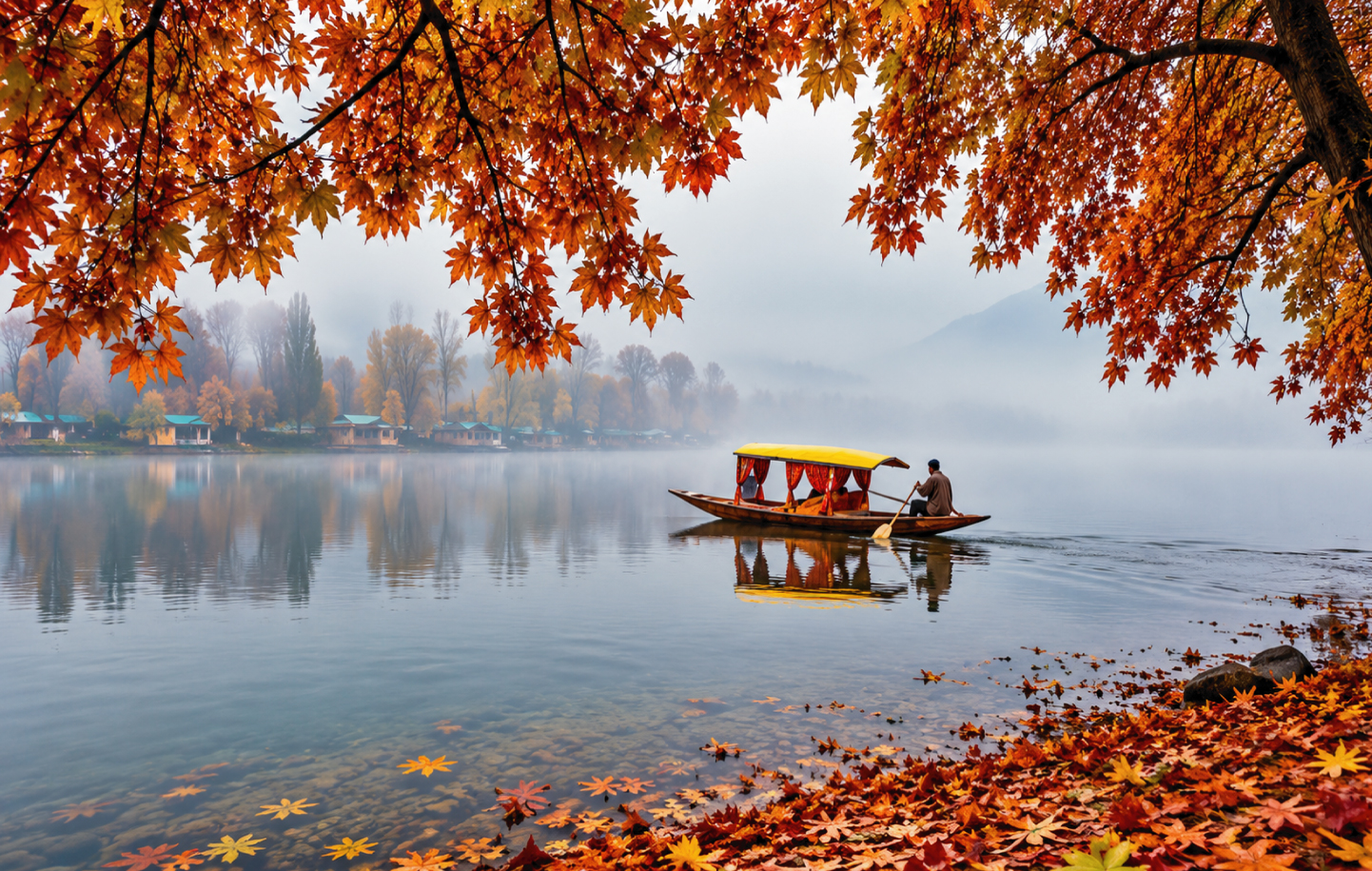
Kashmir has been photographed, filmed, narrated, and debated for decades. To the outside world, it is often presented through competing images: a breathtaking Himalayan landscape, a disputed territory, a security zone, a site of political crisis, or a symbol in the India-Pakistan conflict. These representations are not necessarily false, but they are incomplete. Between the Kashmir that is politically narrated and the Kashmir that is visually consumed lies another Kashmir: the Kashmir experienced by the people who live there.
This is the Kashmir of ordinary days: of families making decisions under uncertainty, young people planning futures they cannot always predict, workers navigating institutions, parents worrying about their children, and communities learning to live with circumstances that have remained unsettled for generations. It is a Kashmir that rarely becomes a photograph because uncertainty itself is difficult to photograph.
The world has seen Kashmir, but rarely heard it on its own terms. Its image has largely been created by governments, international media, popular culture, and cinema; each picks out particular aspects of the region to represent. What remained missing from these narratives is the perspective of the people who actually live there: how the people of the occupied region experience uncertainty, remember their past, discuss their present, and think of their future. The main problem is not simply that Kashmir is depicted selectively, but that its people have been represented within narratives constructed by others rather than being recognized as voices transforming the narrative of their own homeland.
Bollywood has played a significant role in constructing the external narrative of Kashmir by portraying the region through narratives shaped largely by cinematic and political priorities rather than by the lived perspectives of Kashmiris themselves. Across different periods, films have presented Kashmir as a romantic paradise, a site of conflict, or a landscape of nationalism and security. Even films that portray Kashmir’s cultural heritage only present a selective understanding of its history by emphasizing certain cultural elements while leaving others unspoken
For Kashmiris, culture is not simply music, poetry, clothing or landscape; it is inseparable from memory, family, place and lived experience. It carries the marks of social change, displacement, uncertainty and the ways people have adapted to prolonged political conditions. When these dimensions remain outside the frame, cinema may preserve an image of Kashmiri culture while leaving the experiences of the people who sustain that culture unheard.
This raises a broader question: what happens when Kashmir’s culture is presented without the realities of those who live it? Whether framed through conflict or romanticized through scenic beauty, music and nostalgia, such portrayals can obscure the complex social and political conditions shaping Kashmiri lives.
What remains largely absent is the ordinary Kashmiri perspective on what it means to live amid prolonged uncertainty. Rather than appearing only through moments of crisis, conflict can shape everyday decisions about education, employment, mobility, political expression and future planning. Over time, such uncertainty becomes normalized, influencing how individuals and communities navigate ordinary life. Understanding Kashmir therefore requires placing its cultural heritage within the lived experiences of its people.
Kashmir is socially, politically and culturally diverse, and its people hold different views, aspirations and interpretations of their circumstances. Yet this diversity makes it even more important to move beyond externally constructed categories such as terrorism, nationalism, development, tourism, victimhood or resistance. These frameworks may describe particular dimensions of Kashmir, but they cannot by themselves explain how people experience their homes, relationships, memories and futures.
The distinction, therefore, is between Kashmir as an image and Kashmir as a lived space. A tourist may encounter a landscape; a filmmaker may see a story; a government may emphasize development and integration; and a geopolitical analyst may view a territorial dispute. For a resident, however, that same landscape is home a place of family, neighborhoods, livelihoods, memories, and cultural belonging, but also of uncertainty and adaptation. The mountains that appear as scenery in a film may be the route someone takes to work and home. A city presented as a tourist destination is simultaneously a family’s home through decades of political and social change.
This is where the limitations of representation become most consequential. The effects of prolonged conflict are not confined to events dramatic enough to become headlines. They can be found in postponed plans, altered routines, cautious conversations, interrupted aspirations and the gradual adjustment of expectations. Such experiences are difficult to photograph because they unfold quietly and cumulatively. Yet their ordinariness does not make them insignificant; rather, their persistence reveals how political uncertainty can become woven into everyday social life.
Understanding Kashmir requires moving beyond externally constructed narratives and recognizing lived experience as an essential source of knowledge. The memories, cultural practices, anxieties and aspirations of Kashmiris reveal dimensions of the region that remain obscured when it is viewed primarily as a geopolitical dispute, a security concern or a cultural landscape.