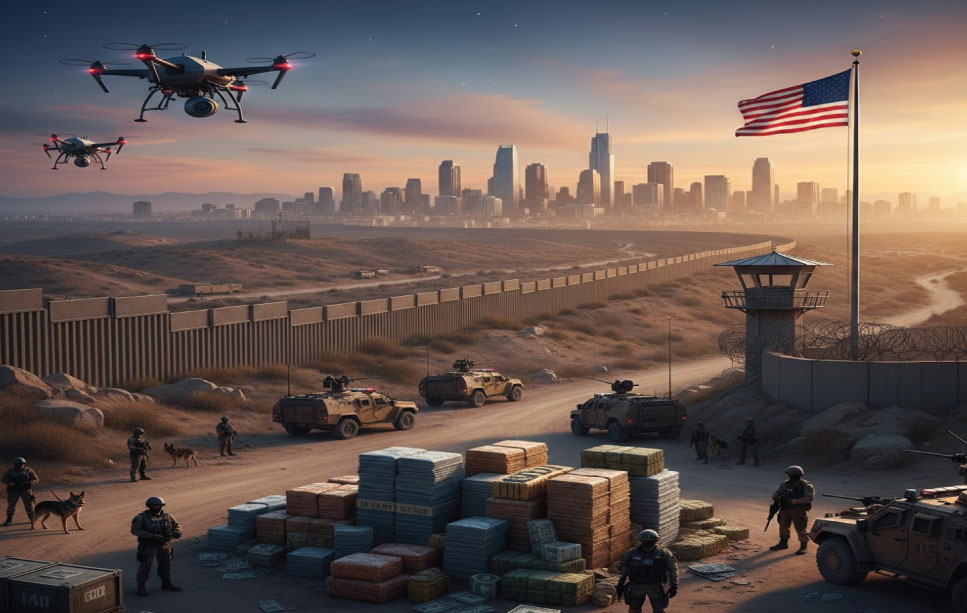
THE United States has unveiled its 2026 National Defense Strategy (NDS), a quadrennial report last published in 2022, which diverges significantly from Biden-era strategies, focusing more inwardly on border security and countering narcotics.
While the 2022 strategy identified China as the US’s primary strategic competitor, the 2026 NDS shifts the burden to allies, adopts a softer tone toward China and Russia and calls for “respectful relations” with Beijing, omitting any mention of Taiwan. Russia is described as a “persistent but manageable” threat affecting NATO’s eastern members.
Notably, India, long courted as a key strategic partner against China, is absent. In November 2025, the US and India renewed their defense cooperation agreement for another 10 years, but the 2026 NDS signals a recalibration. Observers suggest that after three and a half decades of engagement, Washington’s era of strategic altruism toward India is over. Previous US National Security Strategies bet on India’s rise to counter China, yet the latest strategy signals a minimal US presence in Asia, responding to China mainly from a distance using the First Island Chain and trade leverage.
A trust deficit has emerged, exacerbated by India’s failure against Pakistan. India’s May 2025 clash revealed limitations in its military effectiveness, undermining Washington’s confidence. The second Trump Administration has strengthened ties with Pakistan’s civil and military leadership rather than pressuring it. India’s strategic culture—reliant on rhetorical deterrence, media-driven militarism and exaggerated claims of conventional superiority—faces structural deficiencies in jointness, command and control and operational readiness. Consequently, the US appears unwilling to base defense planning on a partner whose performance remains inconsistent.
India’s doctrine of strategic autonomy, once tolerated, is now a liability. Washington increasingly demands alignment from key partners. India’s continued ties with Russia, including energy imports and reluctance to support Western sanctions, have deepened US frustration. Senior officials have accused India of indirectly financing Russia’s war in Ukraine. Diplomatic and economic incentives failed to alter India’s priorities, highlighting that it cannot be relied upon in systemic crises affecting US core interests.
Despite India’s narrative as the “world’s largest democracy” and a responsible global stakeholder, strategic documents, rather than rhetoric, define status. By excluding India, Washington has downgraded its global standing, assigning it only a commercial role and marginal contribution to Indo-Pacific security, not a military one. India, despite acting as a “vassal nation” in rhetoric, has been sidelined in long-term US strategic planning. The absence of India in the NDS reflects a judgment on its importance and signals that Washington will not anchor Asian security on unreliable military guarantees.