Current worldwide debates on human rights have once again brought attention to the situation of religious minorities in India. Reports from various human rights organizations and international observers indicate rising concerns about discrimination, social hostility, and violence affecting several minorities. These concerns have raised important questions about the protection of religious freedom, equality before the law, and the rights of vulnerable communities.
The Constitution of India guarantees equality before the law, freedom of religion, and a diverse and multicultural society. However, in recent years, human rights organizations and international observers have expressed concern about the shrinking civic space for religious minorities.
The United States Commission on International Religious Freedom (USCIRF) has repeatedly stated a decline in religious freedom in India since 2020, also designates India a “Country of Particular Concern” (CPC). The commission cites a deteriorating environment characterized by communal violence, hate speech, and targeted policies against religious minorities.
Many Hindu nationalist organizations and groups, including the Rashtriya Swayamsevak Sangh, Hindu Yuva Vahini, Vishva Hindu Parishad, and Bajrang Dal, have been cited in various reports for being linked to incidents of violence against minorities and for promoting majoritarian narratives.
In March 2026, the USCIRF recommended that India be designated a country of particular concern and targeted sanctions be imposed on the RSS and the Foreign Intelligence Agency of India, the Research and Analysis Wing (RAW), describing these sanctions as systematic and egregious violations of religious freedom.
One aspect that is often highlighted in these reports is the rise of Hindutva, an ideological agenda supporting the majoritarian nationalism of Hindu extremists. This Hindutva agenda has gained greater prominence under the Bharatiya Janata Party (BJP), the right political wing of the RSS, during the tenure of India’s current PM Narendra Modi.
A key component of international human rights legislation is the freedom of religion. According to Article 18 of the Universal Declaration of Human Rights, every individual has the right to freedom of thought, conscience, and religion, including the freedom to practice and express one’s beliefs. Article 18 of the International Covenant on Civil and Political Rights provides additional support for this notion, safeguarding religious freedom and prohibiting discrimination based on faith.
Raising violence and discrimination against Muslims in India
According to the research conducted by the India Hate Lab, more than 1147 incidents of hate speech were recorded, of these 98% of speeches targeted Muslims.
Reports from journalists, civil society groups, and international media organizations, including civil society groups, journalists, and international media organizations including, Al Jazeera, BBC News, and Amnesty International, have documented incidents of harassment, intimidation, killings, and attacks against Muslim communities in India. These incidents have included disruptions during religious observances, social discrimination, social and economic boycotts, and vandalism of mosques and shrines.
In March 2026, a hilarious incident was reported in Bhair in which a Muslim Woman observing fast was brutally beaten by a Hindu extremist and forced to consume alcohol mixed with urine, after which she later died.
Similarly, discrimination against Muslims in urban housing, including a case in which a Muslim woman was repeatedly denied rental housing due to her religious identity. These incidents show a pattern of social exclusion faced by Muslims.
Another disgraceful incident occurred during the ceremony for the distribution of appointment letters to doctors, when Bihar Chief Minister Nitish Kumar publicly removed the veil of a Muslim doctor as she stepped onto the stage to receive her appointment letter. The public humiliation of the Muslim woman by the Chief Minister raises serious concerns about women’s safety, religious intolerance, and individual freedoms in India.
There have been a series of incidents in which Muslims have been publicly humiliated, beaten, and harassed by Hindu extremist groups. They have been forced to raise the slogans of Jai Shri Ram in academic institutions, workplaces, markets, while traveling, and residential areas. Even Muslim members of parliament have faced derogatory remarks from Hindu parliamentarians, and such treatments have increasingly become a new normal in India.
Threats to Christian Community: Violence and Intolerance
The Christian community is also facing violence from Hindu extremists. In 2024, persecution of Indian Christians increased due to growing Hindu nationalism and stricter anti-conversion laws. According to the United Christian Forum, more than 525 attacks against Christians were reported. These incidents include church vandalism, arrest of preachers, and disruption of prayer gatherings, killings, and assaults. Civil unrest in Manipur since 2023 has targeted Christian communities with villages burned, thousands displaced, and worsening humanitarian concerns.
During the Christmas celebration of 2026, Christian communities were harassed, beaten, and prevented from celebrating their religious festival by Hindu extremist groups.
Another vulnerable group is the Dalit Community, which has been caste-based, facing discrimination. Dalit Muslims and Dalit Christians experience multiple layers of marginalization and violence because of their caste background and religious identity.
Religious polarization has also contributed to symbolic developments, such as the inauguration of the Ram Mandir in Ayodhya, built on the site where Babri Masjid once stood. The Citizenship Amendment Act, introduced into India’s framework, was introduced with religion as a criterion, aiming to marginalize Muslim communities and undermine the constitutional principle of equality.
Religious persecution in Indian illegally occupied Jammu and Kashmir
Similarly, in Indian illegally occupied Jammu and Kashmir, IIOJK, several legislations have been introduced to grant the non-native populations, mainly Hindus, domicile status, aiming to transform this Muslim-majority region into a Hindu-dominated one.
Religious discrimination also affects the access to education for Kashmiri youth. In January 2026, Shri Mata Vishnu Devi Medical College in Jammu was closed after 42 of 50 seats were secured on merit by Muslim students. Hindu groups led a protest against the Muslim students, arguing that since the college is funded by a Hindu organization, Muslims should not form the majority. This act raises serious concerns.
Across India, Kashmiri students were threatened during the month of Ramzan when they demanded facilities for Sehri and Iftaar.
Kashmiri traders, especially Shawal sellers, have faced harassment and physical abuse by Hindu groups across the country. The Historic Jamia Masjid Srinagar remained closed for Friday and Eid Prayers as well as for the blessed night of Laylat al Qadr, limiting access to collective worship.
The protection of the fundamental rights of minorities is the strength of a democratic society. India, which calls itself the world’s largest democracy, is showing poor democratic values where minorities are suffering and denied their basic rights. The influence of Hindutva ideology promotes the idea that Hindustan (India) is only for Hindus, and other minorities who wish to live in India must follow the Hindutva agenda. Many Indian actors and journalists have also stated that what is happening in India is the preparation for genocide, and the authorities intend to wipe out the Muslims.
This raises the question: if Indian authorities were to eliminate Muslims and other minorities, leaving only Hindus, what would happen next? Hindu society is already divided into upper and lower classes, and in many cases, upper-caste Hindus do not allow lower caste indiduvals to sit with them. Would this cause another phase of division between upper and lower class Hindus, ultimately turning Hindustan into a place only for upper-class Hindus?
The situation in India demands urgent international attention to implement the norms for the protection of minorities. Safeguarding the principles of the Universal Declaration of Human Rights requires accountability, vigilance, and collective commitment by the international community to defend the rights of every individual.
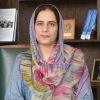
Saba Ghulam Nabi
The author is a research officer at the Center for International Strategic Studies in Pakistan-administered Kashmir. Holds an M.Phil in Kashmir studies from the University of Azad Jammu and Kashmir, and is also an alumna of the Near East South Asia (NESA) Center for Strategic Studies and the Nuraa Women’s Institute, Indonesia (NWI).