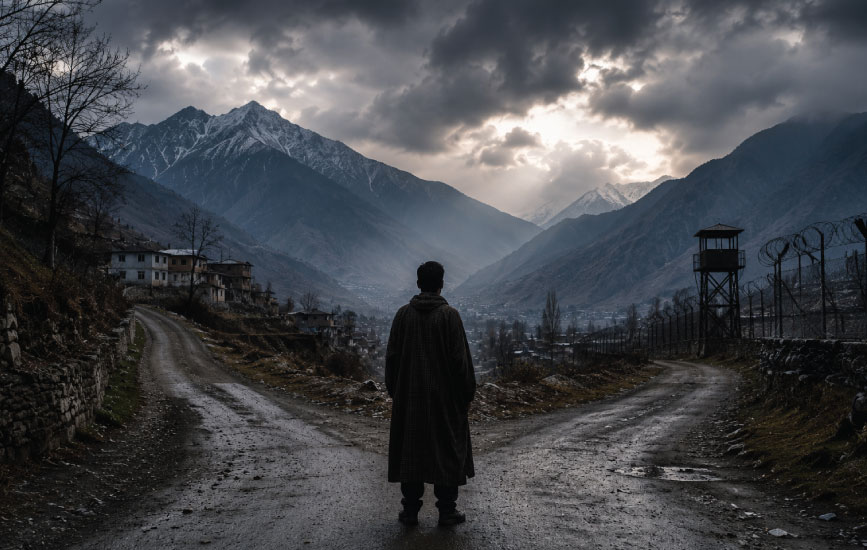
AUGUST 5, 2026, marks the seventh anniversary of the revocation of Article 370 and Article 35A, the special constitutional status of Jammu and Kashmir and reorganized the state into the Union Territories of Jammu and Kashmir and Ladakh. It was described as a “transformative” decision that would bring peace, development, transparency, investment and political stability. However, seven years later, the main question is whether those promises have brought a lasting political settlement or made an already complex conflict more complicated. The debate on Article 370 has shifted from the legality of abrogation to the practical consequences. New Delhi points to better infrastructure, rises in tourism, improved road and rail connectivity and a decline in violence incidents, but these metrics, in Indian views, cannot replace democratic legitimacy, political participation, civil liberties and public trust.
Rapid expansion of infrastructure has caused fears of deforestation, environmental degradation and changing land use patterns, threatening the fragile Himalayan ecosystem and local water resources. However, traditional livelihoods, especially apple orchards and saffron cultivation, are under increasing pressure, raising concerns of economic insecurity and displacement among rural communities. A major unresolved issue is the delay in the restoration of the statehood of Jammu and Kashmir. The region continues to be a Union Territory where the Lieutenant Governor wields significant executive powers instead of the elected government.
The 2024 Assembly elections generated hope of democratic governance returning to the substance after years of direct rule from the Centre. Omar Abdullah’s electoral victory was a sign of hope that an elected government would get back the real powers of administration. But the institutional framework has created a dual power structure where important powers, including policing, bureaucracy and several important administrative decisions, continue to be concentrated in the Lieutenant Governor’s office.
The post-2019 governance model has also intensified the debate about the balance between security and civil liberties. Kashmir remains under a tight security regime seven years after the abrogation of Article 370, with a constricted civic space and human rights violations, challenging official claims of peace and normalcy. The political order after 2019 has not solved the conflict but has increased the political alienation and accelerated the socio-cultural changes to transform the identity of the region. Developments since 2024 further clarify the ongoing friction between elected representatives and centrally appointed authorities. Administrative decisions, including transfers of senior officials undertaken without the consent of the elected government, have triggered disputes over constitutional authority. These measures highlight that the central political question in Jammu and Kashmir is no longer solely constitutional status, but the effective distribution of executive power between democratic institutions and unelected administrators.
The current scenario reveals unfulfilled promises, with the people of Jammu and Ladakh, who initially supported the revocation, now demanding its restoration. Initially, only the people of the Kashmir Valley were deprived of basic rights and peace, but now the discontent has spread to Jammu and Ladakh as well. The people of Jammu and Ladakh initially celebrated the revocation, but they are now facing discrimination in commercial activities due to outsiders launching businesses, leading to calls for the return of Article 370. The discrimination against the people of Kashmir exists beyond the Valley; the attacks on Kashmiri students, traders and workers have heightened feelings of insecurity and exclusion, reinforcing concerns about equal citizenship, dignity and social acceptance. Seven years after Article 370’s revocation, the Kashmir debate has shifted from constitutional change to questions of statehood, democratic accountability and meaningful political representation, with growing demands for restoring genuine governance and public participation.
The central promise of “normalcy” remains contested because normalcy cannot be measured exclusively through statistics on tourism, investment or infrastructure. Sustainable peace requires institutions that command public confidence, governments that possess genuine executive authority and citizens who are able to express political disagreement without fear. Democratic legitimacy derives not merely from conducting elections but from ensuring that elected representatives possess meaningful powers to govern. Delayed statehood, the persistence of centralized administrative control, continuing debates over civil liberties and unresolved questions regarding democratic representation suggest that the post-2019 framework remains incomplete. As another August 5 passes, the region stands at an important political crossroads. Whether New Delhi chooses to move beyond administrative management toward genuine political reconciliation may ultimately determine whether the promises made in 2019 are remembered as the beginning of lasting stability or as an opportunity that remained unfulfilled. The result is a widening gap between governmental priorities and public expectations. While official discourse increasingly highlights infrastructure, tourism and investment as symbols of normalcy, the people of Kashmiris continue to evaluate the post-2019 period through a different lens, one defined by democratic participation, environmental protection, economic security and political dignity.