

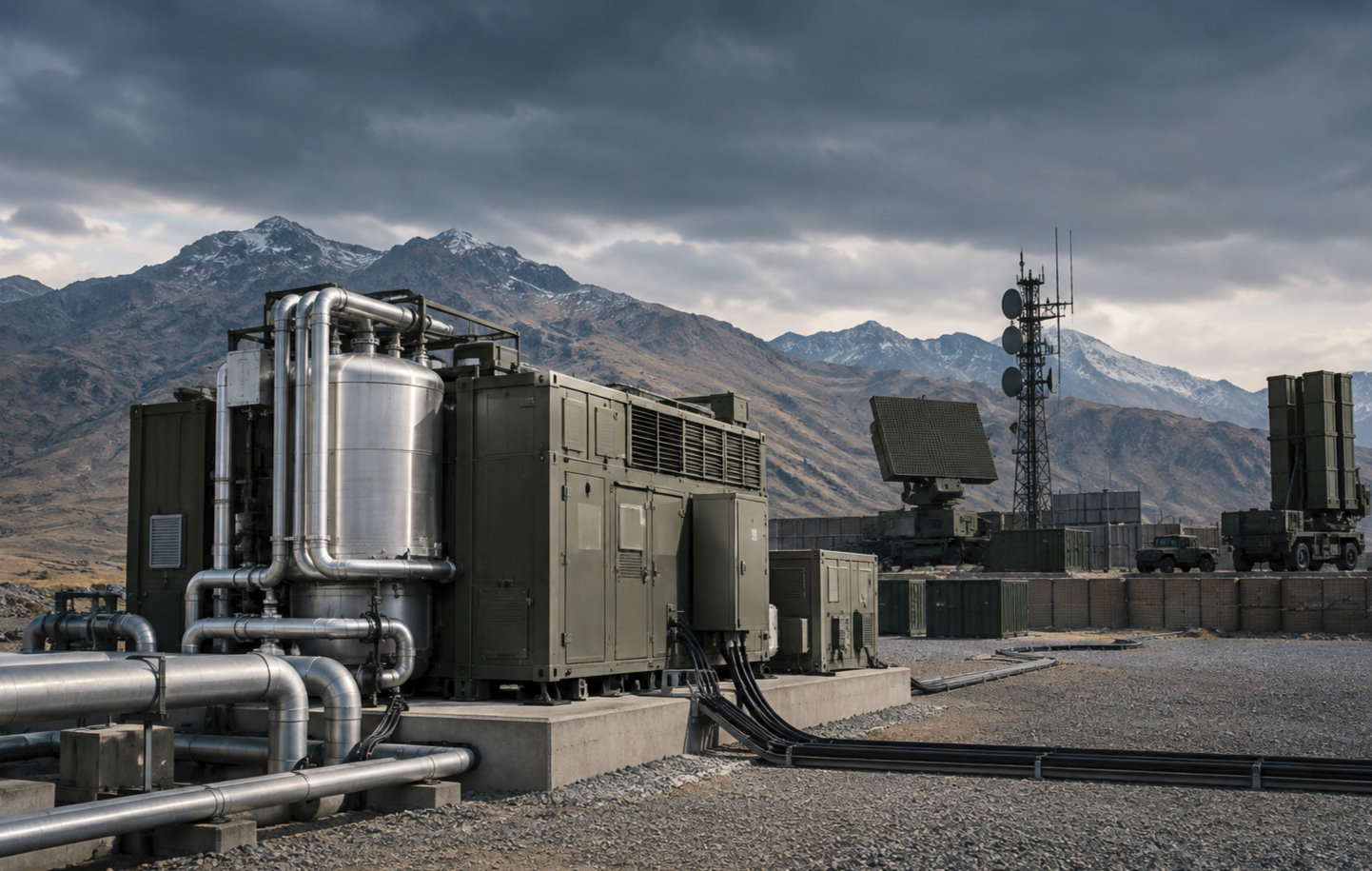
A future military base may not only rely on diesel generators, vulnerable grids, and exposed fuel convoys for energy. It may instead be powered by a small nuclear reactor integrated into AI-enabled command nodes, electronic warfare systems, air-defense radars, counter-drone networks, and directed-energy weapons. For the law of targeting, this integration creates complexity. It also reflects broader trends towards increasingly power intensive warfare and greater vulnerability of military energy supply lines.
The United States has already moved in this direction. Project Pele seeks to design a transportable microreactor capable of providing one to five megawatts of electric power for military use. The Janus program points in a related direction by seeking secure and resilient energy for defense installations, critical infrastructure, and vital missions. Other States are exploring similar possibilities. Canada has supported research into whether microreactors could provide reliable power for remote northern defense infrastructure, while Russia is developing small modular reactors in strategically sensitive Arctic regions, where energy infrastructure, remote settlement, resource extraction, and military infrastructure often overlap.