

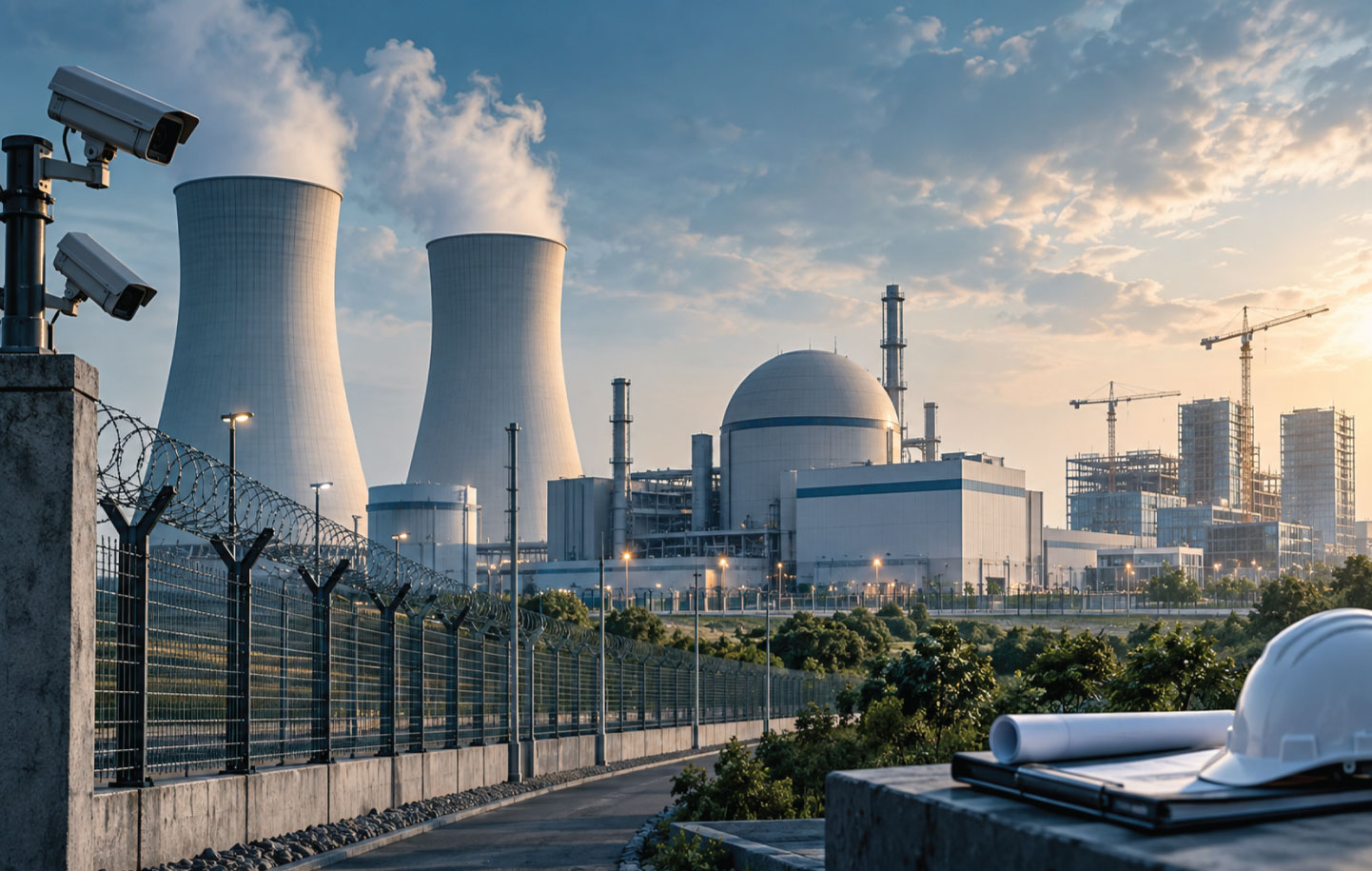
In order to dramatically expand nuclear power, India is bringing the private sector into a nuclear legal framework traditionally dominated by the state. In this regard, India passed the Sustainable Harnessing and Advancement of Nuclear Energy for Transforming India (SHANTI) Bill in December 2025. The SHANTI Act aims to support India’s long-term objective of achieving 100 GWe of nuclear capacity by 2047.
The Act nullifies and replaces the Atomic Energy Act of 1962 and the Civil Liability for Nuclear Damage (CLND) Act of 2010. Before the SHANTI Act, India’s atomic energy sector was governed by the Atomic Energy Act, which controlled research, development and use of nuclear materials in addition to regulating responsible nuclear operations. To create the liability framework for nuclear incidents, the CLND Act was passed in addition to the Atomic Energy Act. Although India considered SHANTI Bill a significant change, a step towards energy development and modernization, it has substantial consequences. The debate has focused on investment, liability and energy security while the overlooked issue is nuclear security. Considering India’s poor nuclear safety record, this policy change is alarming. Whether a country with poor nuclear safety and security record would be able to accommodate private sector in nuclear domain. Since the 1990s, there have been frequent issues with radioactive material theft and illegal sales.
The draft rules and regulations placed in public domain for consultation by the department of Atomic Energy highlights significant changes pertaining to liabilities and responsibilities for nuclear incidents. Even though the SHANTI Act retains many aspects of the atomic energy and CLND acts, such as the maximum liability of 300 million special drawing rights (SDRs) for each nuclear incident, the no-fault liability regime, maintenance of liability funds and insurance and financial security requirements. The second schedule of the act establishes a graded maximum liability structure (under the no-fault liability regime) based on the nuclear power generation capacity of the installations. The highest liability cap is INR30 billion for reactors producing more than 3,600 megawatts, while the lowest liability cap is INR1 billion for reactors producing less than 150MW, fuel cycle facilities, reprocessing plants and the transportation of nuclear material.
The term “operator” now has a broader definition. Domestic businesses can now apply for licenses and run nuclear facilities as per SHANTI Act. While previously government and government-owned companies with a license to run nuclear facilities were the only organizations included by the narrow definition of “operator.”Operators’ liability has also been evaluated in SHANTI Bill. The CLND Act established some circumstances where the operator would not be held accountable, such as incidents resulting from serious natural catastrophes, armed conflict, civil unrest or terrorism, even though the operator was ultimately responsible for nuclear incidents. In cases where a “nuclear incident has resulted as a consequence of an act of the supplier or his employee, which includes the supply of equipment or material with patent or latent defects or sub-standard services,” suppliers may be held accountable under Section 17 of the CLND Act. As per SHANTI Bill, the specific right of recourse against suppliers has been removed. Section 16 of the SHANTI Act does not preserve the operator’s right of recourse against suppliers, in contrast to section 17(b) of the CLND Act; instead, this must now be decided upon in a contract between the parties.
The regulation of nuclear material may be further threatened by private corporations that put cost-cutting ahead of safety, increasing the possibility of mishaps and fostering a lack of accountability. Letting private organizations enter this delicate area raises the risk of undermining centralized control over nuclear materials and opening possible gaps for illegal entry, diversion or theft. Further undermining international regulatory control is the fact that a large portion of India’s nuclear sector operates outside the IAEA safeguards, like Kakrapar 1 and 2, Narora 1 and 2 nuclear power reactors are working without IAEA inspection. International and regional stability must not be endangered by India’s nuclear privatization ambitions. Privatizing the nuclear sector could create a risky precedent for the spread of nuclear weapons if there is no strict regulation. This shift in the policy is concerning as the weak safety and security mechanism of India’s nuclear program, with the plan to amend the civil nuclear liability law, will encourage foreign investments while minimizing the supplier accountability despite security risks.
International trust in India’s nuclear governance could be damaged by privatization without explicit safeguards, especially as India is not a member of the Nuclear Non-Proliferation Treaty (NPT) and depends on special exemptions granted, like the 2008 NSG waiver. India’s nuclear sector privatization needs to be closely examined both domestically and internationally if nuclear safety is to continue to be a non-negotiable global priority. Furthermore, keeping in view the associated risks it must be ensured that the privatization is limited to civilian and non-sensitive segments of the nuclear sector. In addition, it should also be ensured that the Atomic Energy Regulatory Body (AERB) is a fully independent statutory body with oversight over both public and private nuclear entities.
—The writer is a Associate Director at the Centre for International Strategic Studies, AJK.
(tahreembukhari1692@gmail.com)