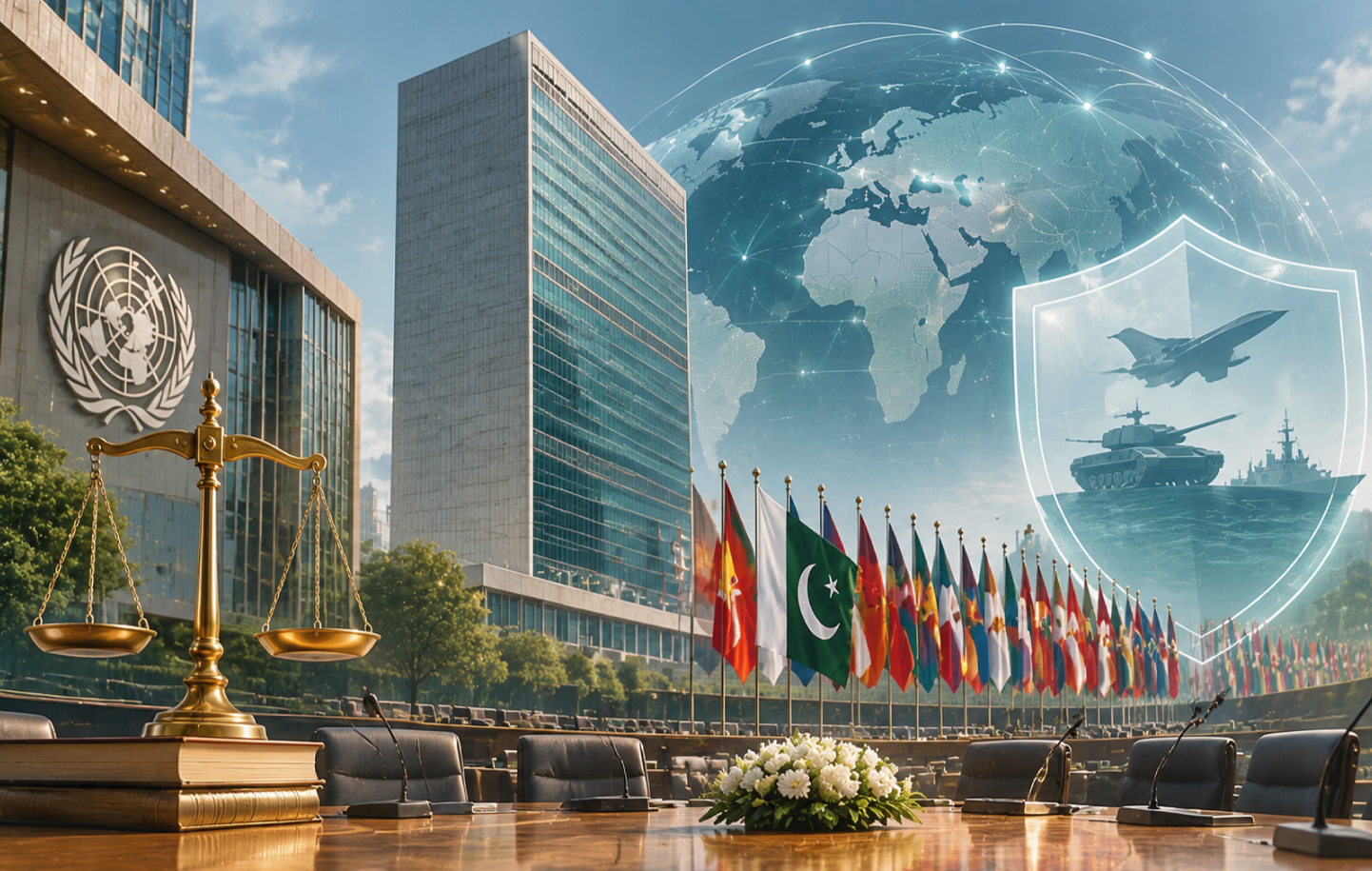
In the time of rising geopolitical tensions and weakening arms control frameworks, Pakistan has managed to get three UNGA First Committee Resolutions passed on arms control and international security. The results highlight Pakistan’s ongoing participation in multilateral disarmament processes and commitment to building confidence between regional countries, conventional arms control, and security assurances for non-nuclear countries.
The resolutions garnered significant international support and reflect the three aspects of international security: conventional arms control, confidence-building measures in the region, and safeguarding against the use or threat of use of nuclear weapons against non-nuclear-weapon states.
The move coincides with growing security worries in South Asian and Middle Eastern regions, where military conflicts and rising geopolitical tension have reignited worries over regional stability and the efficiency of current arms control agreements.
The resolution on conventional arms control was the most prominent in the region and sub-regional group, adopted with a majority of 180 votes. The resolution calls for greater attention to be paid to regional arrangements to deal with military imbalances and lessen the risk of military conflict.
es that State Parties with greater military power bear a special responsibility in the context of security agreements in the region. This is especially significant for South Asia, where Pakistan and India have military parity, which is a critical aspect of the regional security framework.
In the context of Pakistan, traditional arms control is closely tied to strategic stability. Regional military imbalances, along with slow progress on confidence-building measures, can exacerbate mutual perceptions of threat and raise risks of escalation. The resolution thus underlines the need to deal with security issues through regional arrangements and not solely through military power.
The second resolution, entitled Confidence-building Measures in the Regional and Sub-regional Context, was adopted without a vote. The importance of this is that regional security doesn’t only depend on military readiness. Confidence-building measures serve as a blueprint for enhancing communication, easing mistrust, and controlling tensions between states.
Such measures remain relevant in South Asia, where Pakistan and India have engaged in military skirmishes on several occasions, as they help to prevent miscalculations and minimize the risk of escalation. The continued support of this initiative by Pakistan is an indication of its focus on regional solutions for security and dialogue.
The third resolution, Conclusion of Effective International Arrangements to Assure Non-Nuclear-Weapon States Against the Use or Threat of Use of Nuclear Weapons, was approved by 122 votes with none against. This resolution aims to get stronger international assurances for the countries that do not possess nuclear weapons to address their concerns regarding vulnerability to nuclear threats and lack of universally accepted legally binding security guarantees.
Pakistan’s support for this resolution highlighted its continued focus on enhanced security assurances to non-nuclear-weapon states through effective international arrangements.
The above resolutions clearly indicate the linkage between Pakistan’s arms control agenda. Arms control resolves military imbalances, confidence-building measures diminish distrust between regions, and assurances of security are to keep non-nuclear-weapon states safe from nuclear threats. These efforts also emphasize the need to address international security issues through multilateral institutions and negotiated arrangements.
The results of the voting are especially relevant for the disarmament and international security agenda of the United Nations. Draft resolutions for submission to the full General Assembly for adoption are considered by the First Committee. While not binding in themselves, the resolutions adopted by the General Assembly help shape international norms and serve as a basis for further discussions about arms control, disarmament, and security assurances.
These developments have made Pakistan an active and committed player in longstanding diplomatic efforts with the United Nations for conventional arms control, regional confidence-building and disarmament. But a more fundamental issue is how to turn commitment to the principles of international cooperation into a concrete framework. It demands continued diplomatic activity, increased regional dialogue and dedicated cooperation with regard to security mechanisms.
The adoption of the three resolutions is a significant diplomatic triumph for Pakistan, and it offers an opportunity to strengthen Pakistan’s stance on multilateral arms control. This is also a reminder of the importance of equitable security arrangements, regional confidence-building and effective international assurances.
Given the current global uncertainty, Pakistan’s involvement in these initiatives further reinforces the significance of multilateral diplomacy in promoting peace and stability in the region.