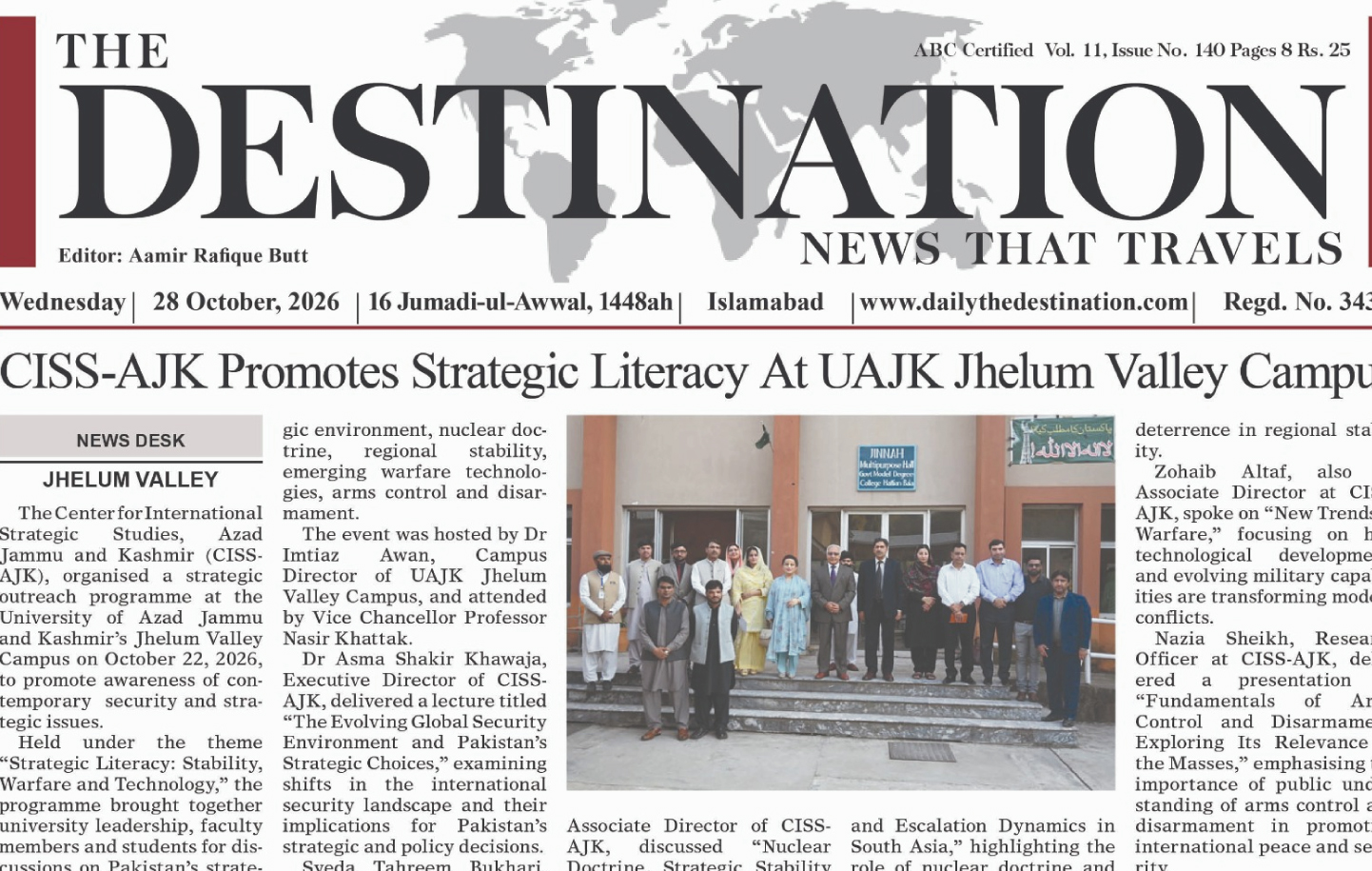
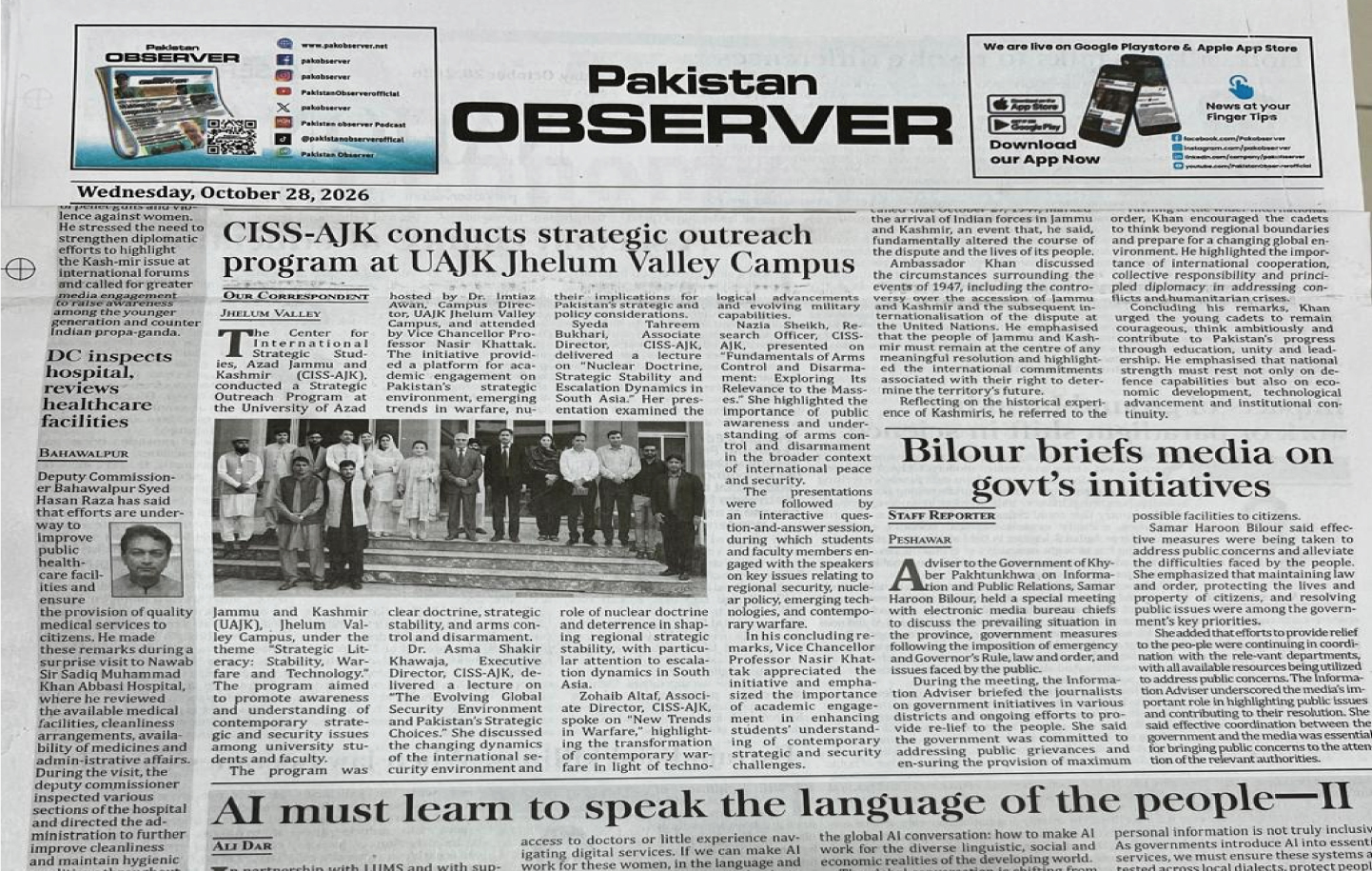
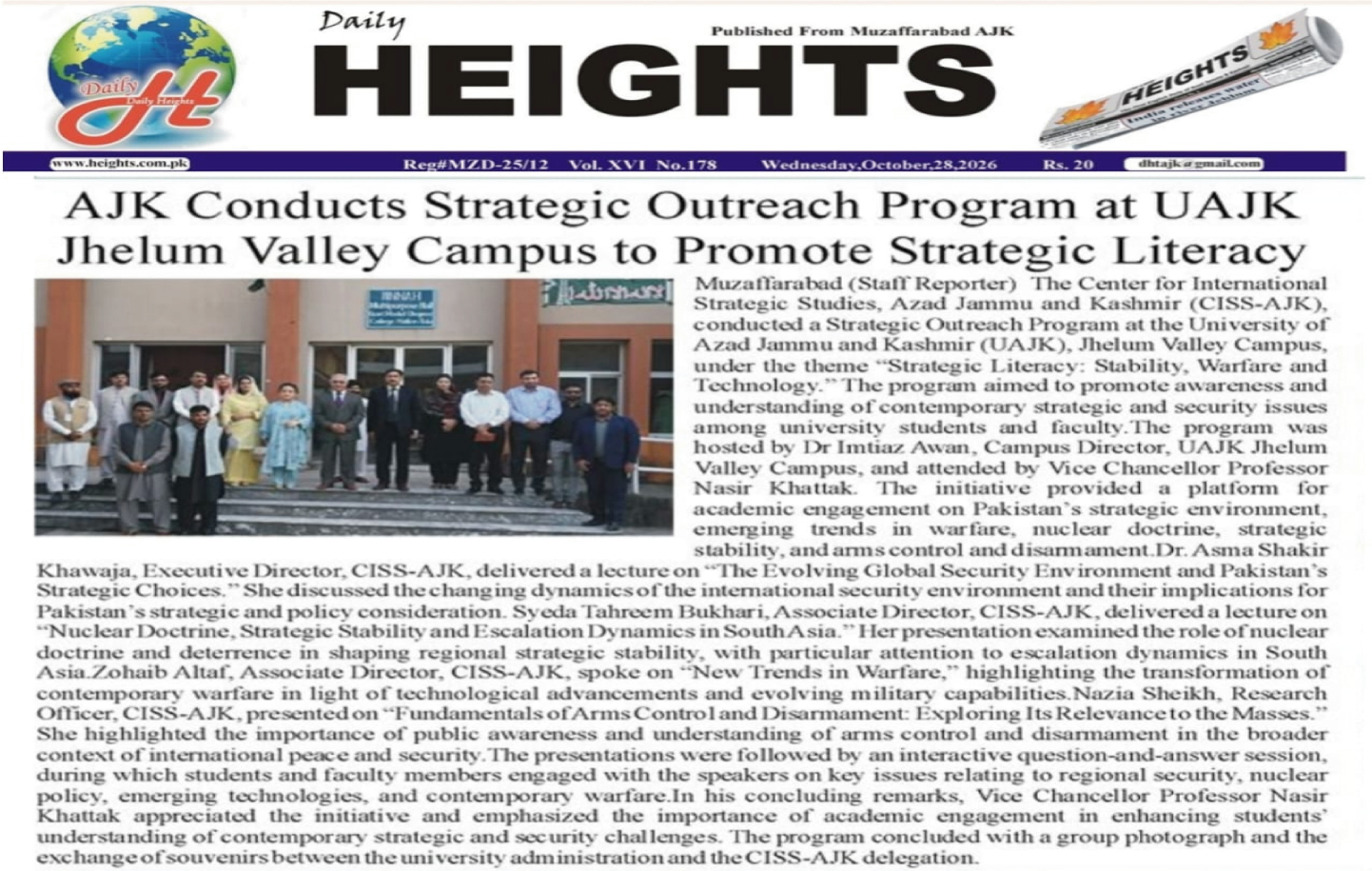
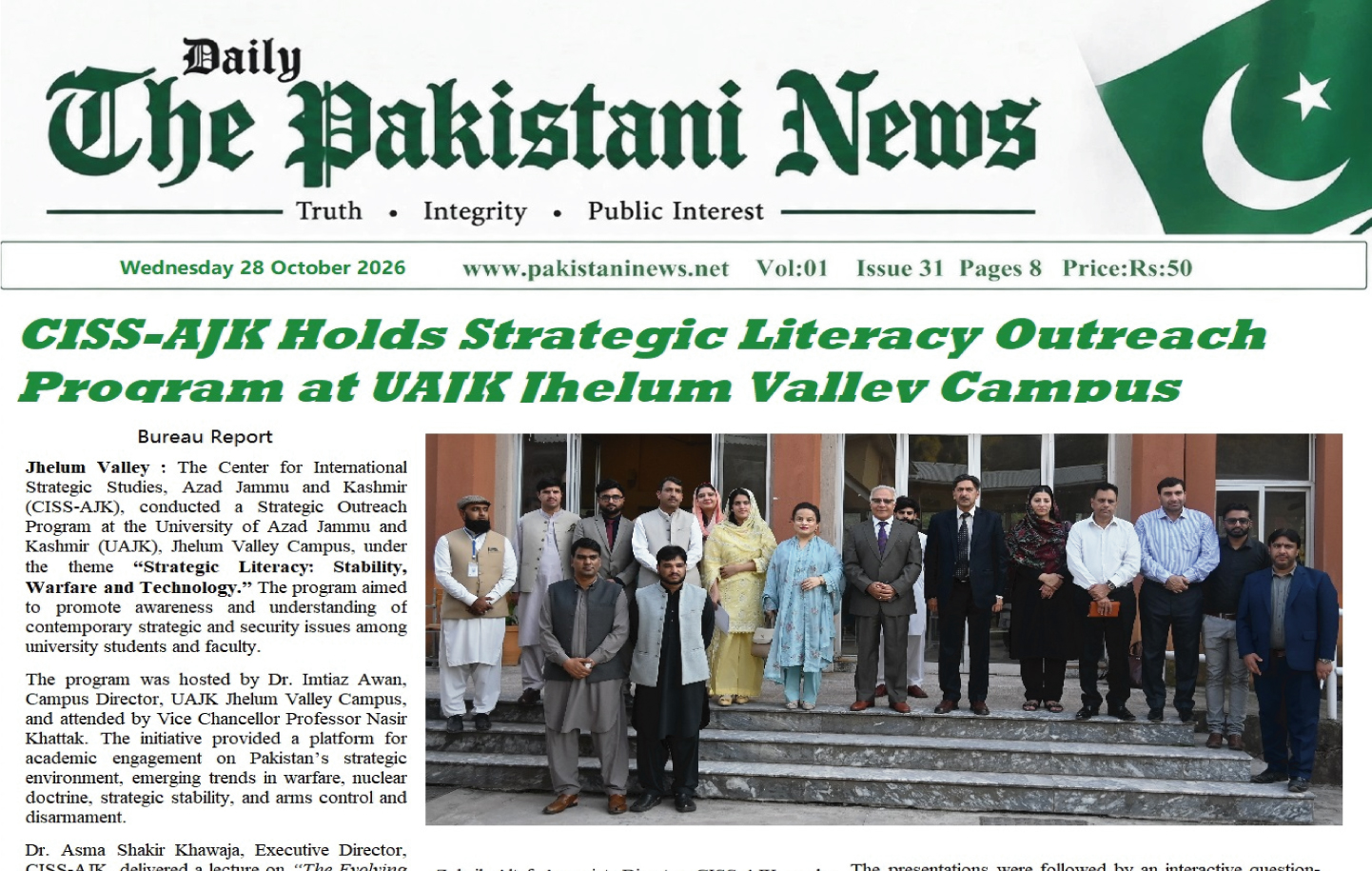
The Center for International Strategic Studies, Azad Jammu and Kashmir (CISS-AJK), conducted a Strategic Outreach Program at the University of Azad Jammu and Kashmir (UAJK), Jhelum Valley Campus, under the theme “Strategic Literacy: Stability, Warfare and Technology.” The program aimed to promote awareness and understanding of contemporary strategic and security issues among university students and faculty.
The program was hosted by Dr. Imtiaz Awan, Campus Director, UAJK Jhelum Valley Campus, and attended by Vice Chancellor Professor Nasir Khattak. The initiative provided a platform for academic engagement on Pakistan’s strategic environment, emerging trends in warfare, nuclear doctrine, strategic stability, and arms control and disarmament.
Dr. Asma Shakir Khawaja, Executive Director, CISS-AJK, delivered a lecture on “The Evolving Global Security Environment and Pakistan’s Strategic Choices.” She discussed the changing dynamics of the international security environment and their implications for Pakistan’s strategic and policy considerations.
Syeda Tahreem Bukhari, Associate Director, CISS-AJK, delivered a lecture on “Nuclear Doctrine, Strategic Stability and Escalation Dynamics in South Asia.” Her presentation examined the role of nuclear doctrine and deterrence in shaping regional strategic stability, with particular attention to escalation dynamics in South Asia.
Zohaib Altaf, Associate Director, CISS-AJK, spoke on “New Trends in Warfare,” highlighting the transformation of contemporary warfare in light of technological advancements and evolving military capabilities.
Nazia Sheikh, Research Officer, CISS-AJK, presented on “Fundamentals of Arms Control and Disarmament: Exploring Its Relevance to the Masses.” She highlighted the importance of public awareness and understanding of arms control and disarmament in the broader context of international peace and security.
The presentations were followed by an interactive question-and-answer session, during which students and faculty members engaged with the speakers on key issues relating to regional security, nuclear policy, emerging technologies, and contemporary warfare.
In his concluding remarks, Vice Chancellor Professor Nasir Khattak appreciated the initiative and emphasized the importance of academic engagement in enhancing students’ understanding of contemporary strategic and security challenges. The program concluded with a group photograph and the exchange of souvenirs between the university administration and the CISS-AJK delegation.