

ABSTRACT
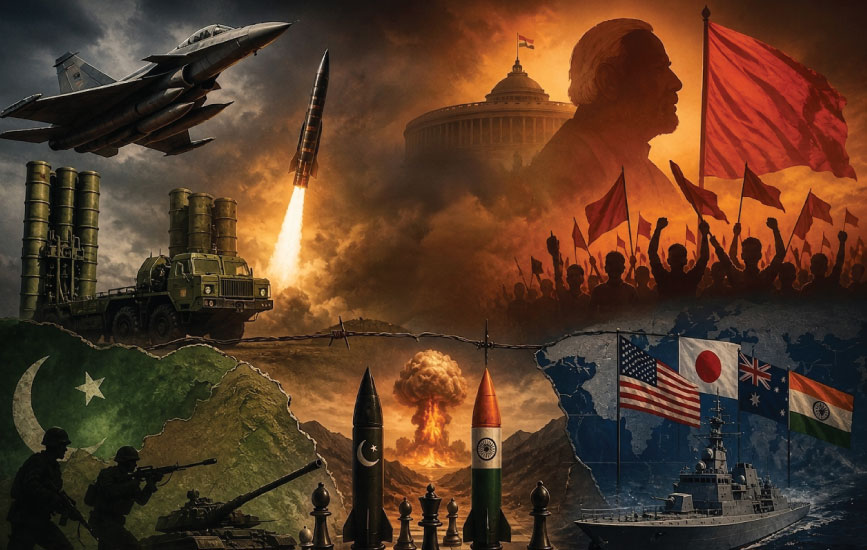
This research explores how far-right Hindu nationalism has influenced the Indian defense policy and the dynamics of the regional arms control, and how this has changed in the years after 2014 under the rule of the Bharatiya Janata Party led by Prime Minister Narendra Modi. This study attempts to refute the hypothesis that the Hindu nationalist ideology of the BJP has been systematically accelerating military modernization, weakening arms control systems, and increasing competition in the region through systematic comparative analysis based on SIPRI data on defense spending, incident analysis, and confidence-building measures analysis. The main highlights are the growth in defense expenditure of 85 percent between 46.4 billion (2013-14) and 86.1 billion (2024- 25), aggressive procurement of sophisticated weapons systems such as Rafale jets, S-400 systems, and Agni-V MIRV systems, and a systematic demolition of confidence-building mechanisms with Pakistan. The study demonstrates how there has been a paradigm shift due to strategic independence to open US alignment via Quad involvement and basic military alliances, as well as the metamorphosis of media debates that advance ultra-nationalism and war-mongering. Such reorientation of ideologies has led to an arms race in the region, breeding typical spirals of security dilemma and putting nuclear war at high stakes in the region with the highest population. The paper finds that the domestic political actors, especially the securitization of electoral politics and Hindutva nationalism, are the most common barriers to effective arms control regimes in the South Asian region, and the effects of this are felt by the sense of regional security as well as global security due to the nuclear capacities involved.