

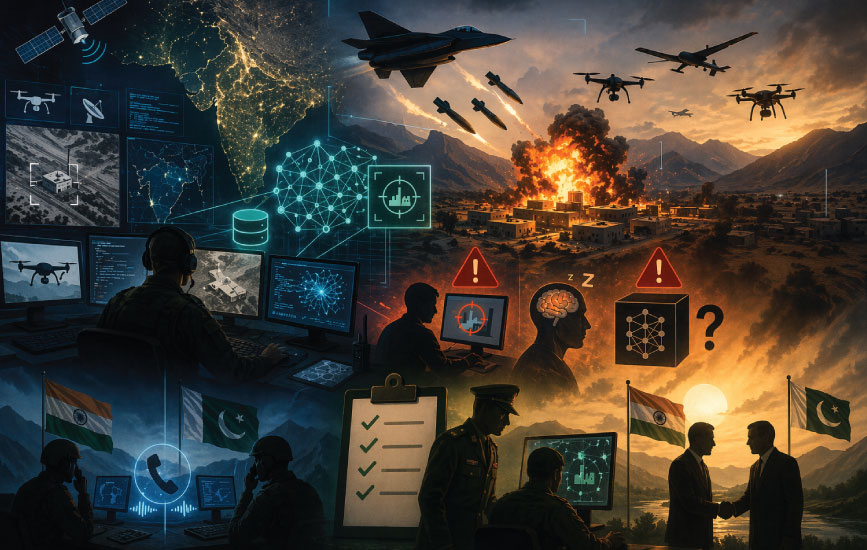
The U.S.-Israel-Iran war demonstrates that artificial intelligence (AI) is increasingly shaping military decision-support and targeting processes. In the conflict, the United States has reportedly employed AI tools that analyze large volumes of satellite, drone, and intelligence data to assist in strike planning. These tools appear to include decision support systems (DSS), such as the Maven Smart System, which process data from various sources for use in operational planning and target identification.
Reports indicate that DSS have significantly accelerated U.S. operational tempo: In the first four days of the war, the U.S. military struck 2,000 targets. In comparison, during earlier operations, such as the campaign against the Islamic State, that scale of targeting would require around six months. This difference equates to a remarkable 45-fold increase in operational tempo, making clear the appeal of such systems to defense planners. As such, similar AI tools have reportedly featured prominently in recent conflicts, including the Russia-Ukraine war and the Israel-Gaza conflict.